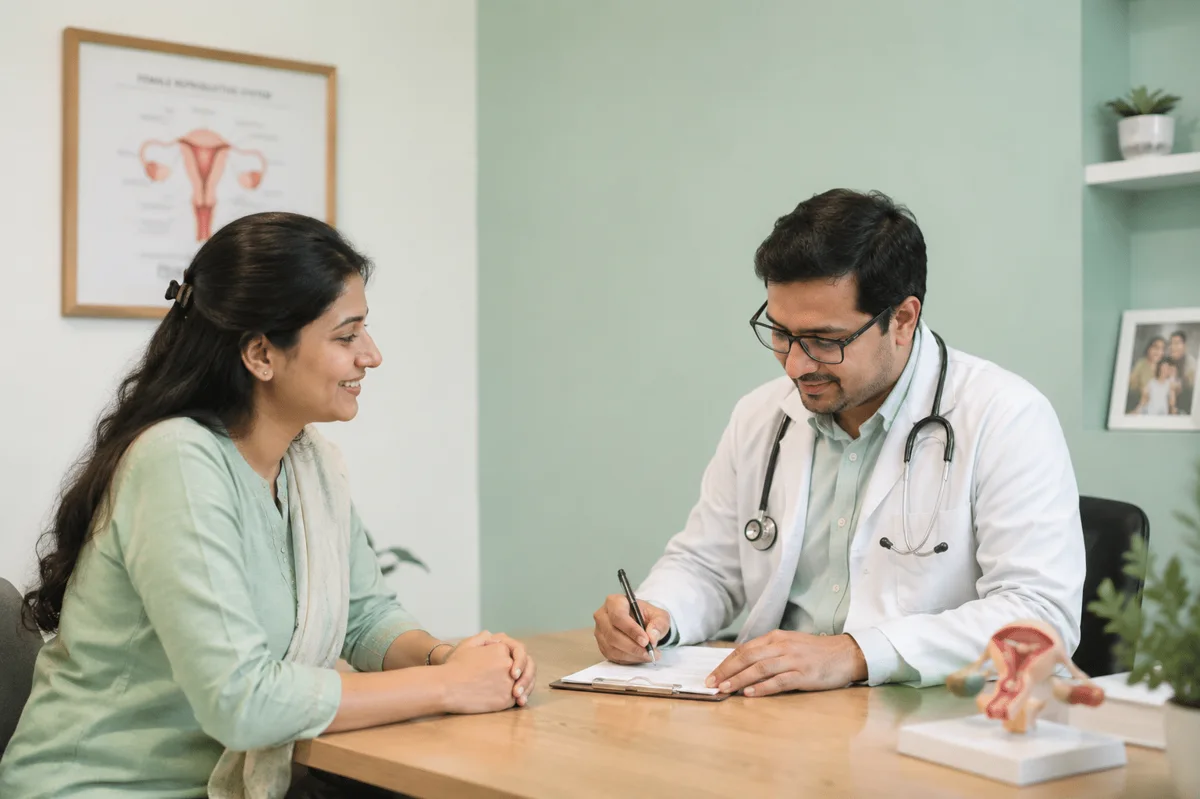
Chorionic villus sampling, or CVS, takes a small sample of placental tissue for diagnostic testing. It is offered in selected pregnancies and needs an explanation of both the sampling procedure and the laboratory tests planned.
Ask why CVS is being considered
The reason may relate to screening, ultrasound or a known inherited condition. Ask why CVS is suitable at this stage and how it compares with alternatives such as amniocentesis. Timing, the question being investigated and clinical factors all matter.
Understand what is sampled
CVS examines placental tissue. In some situations, the placenta and baby may not give an identical genetic picture, so a result can require further interpretation or another test. Ask how uncertain or mosaic findings would be handled. A rapid result may not answer every question covered by later analysis.
Discuss the procedure separately from the result
The route used to obtain the sample depends on the clinical situation. Ask about discomfort, ultrasound guidance, procedure-related risks and aftercare. Tell the clinician about bleeding, infection concerns, medicines and other relevant history before the appointment.
Make a results plan
Confirm the tests ordered, expected turnaround and the person who will explain the findings. Ask whether counselling will be available if a result is unexpected. After the procedure, follow the written instructions and seek advice for bleeding, fluid leakage, fever or significant pain. The decision should be made with a clear understanding of the information you want, the limitations of the test and what choices might follow the result.
Sources & further reading
International resources provide background information. Your clinician can explain the approach, screening schedule and requirements relevant to you in India.
General information cannot diagnose a condition or replace personal medical advice. For severe or rapidly worsening symptoms, seek urgent medical care.
The archive date organises this collection. This guide was first published on 29 October 2026.