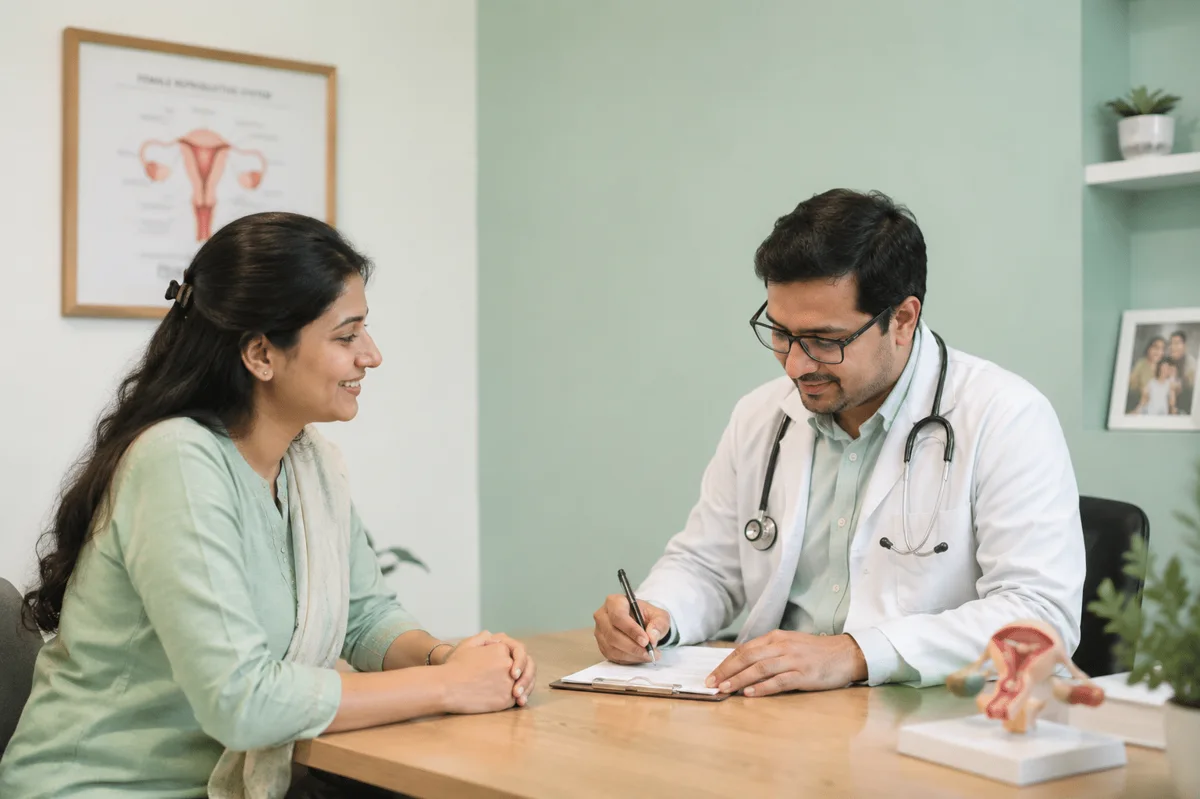
A hysterectomy removes the uterus and ends the ability to carry a pregnancy. Before deciding, it is important to understand exactly what will be removed, why the operation is recommended and what alternatives are suitable.
Clarify the proposed operation
The cervix, tubes and ovaries are separate structures. Ask which are included in the plan and why. Removing ovaries has different implications from removing the uterus alone. Ask for a diagram if the terminology is confusing, and discuss any effect on hormones and future screening.
Define the expected benefit
The reason may involve bleeding, pain, prolapse, cancer or another condition. Ask which symptoms are likely to improve and which may persist. If the condition is not urgent, discuss suitable medical or less extensive procedural alternatives and the consequences of waiting.
Compare surgical approaches
The operation may be vaginal, laparoscopic, robot-assisted or abdominal depending on the situation. Ask how the approach affects risks, hospital stay and recovery. The smallest external incision is not the only consideration; the operation should fit the clinical need.
Prepare for life after surgery
Discuss fertility wishes explicitly before consent. Ask about sexual function, menopause-related symptoms where relevant, activity, work and help at home. Request an itemised estimate and a clear results and follow-up plan. Seek a second opinion if you need more explanation or time to consider a major irreversible decision. You should leave the consultation able to describe both the reason for the operation and the choices that remain available to you.
Sources & further reading
International resources provide background information. Your clinician can explain the approach, screening schedule and requirements relevant to you in India.
General information cannot diagnose a condition or replace personal medical advice. For severe or rapidly worsening symptoms, seek urgent medical care.
The archive date organises this collection. This guide was first published on 29 October 2026.